Friday, August 2, 2024

nr.11 : 「簡単には見えない存在」と日本人


Not only humans and animals live in Iceland.
Huldufólk (EN: Hidden people, Elf-like existence) also living here.
Sadly even though I've been in Iceland more than 15 years, I haven't met them.

Icelanders don't talk about Huldufólk daily, moreover I don't feel that people strongly believe Elves.
However, people might say naturally, like "That rock over there is related to Huldufólk...".


I believe that this Icelanders' "feeling" is very familiar to Japanese people.

Because Japanese people also have similar kind of sense that "existence that is not easily visible," such as Yookai-monsters and ghosts in our life. (Of course how strongly "believe" is depends on the person.)

In 2024, I believe that almost no Japanese encounter Yookai-monsters regularly.
But, for example, Japanese-inn in Iwate Prefecture and in Tohoku-region where you may be able to meet a "zashiki-warashi" are still popular and it's not easy to make a reservation for staying.

There are proverbs related to Yokai-monsters, like "Kappa no kawanagare (EN: Even Homer sometimes nods.)" and "Onaji ana no Mujina (EN: Birds of a feather.)".
I've never met Japanese who complains "There are no kappas!" or "There are no Yokai-monsters, so the proverb doesn't make sense" or something like that.

In recent years, it seems that many Japanese say they are "non-religious" people.
Though I believe that only a few would consider Jizo-statue is just a stone statue so may treat badly, or may behave "whatever" when they visit temples and shrines.
In the first place, in my opinion, listening to the bells on New Year's Eve or going to a shrine/temple for praying on New Year's day means people still have a certain kind of devotions.
Summer is the season for ghost stories, and I'm sure some people test their courage by doing Kimodameshi.


Ghosts (Yuurei, Obake), Yokai-monsters, spirits, gods... there are many "beings that are not easily visible" in Japan.
Probably now more people are "not denying their existence" than "actively believing" in them.
But still, I understand that believe "beings that are not easily visible" is the Japanese sensibility and culture.


Friday, July 26, 2024

nr.10 : マイペースでいこう。ファイト!


It seems that many Japanese language learners have difficulty with Katakana words.
Some of them said difficult to write, others said hard to understand.

Brand-new Katakana words often came from English nowadays, but older-generation words came from various languages.

If you have learned Japanese history, then easily understand why some of them came from Chinese and Portuguese. Russian, Ainu language, French... A variety of origin of Katakana words words.

So, modern Japanese's Katakana words are foreign origin, right?

If so maybe it's easier to learn, however sadly, not everything. There are Japanese-made Katakana words.

Often they are called as "Wasei-Eego (EN: Japanglish, Japanese-made English)".
Like you see, the words came from English, but Japanese people mean differently or the word doesn't exist in English.

I believe that probably some Japanese doesn't know about it, and thinks it's "pure" English words.

There are many Wasei-Eego, so I picked up only few as examples.

  • Hai ten shon (i.e. high + tension) : The animated object (normally, human being) is excited for something. It uses as positive meaning.
e.g.) ディズニー映画の『アラジン』に出てくるジーニーはいつもハイテンションだ。

  • Mai peesu (i.e. my + pace) : Someone doing something as his own pace. Describing personality/character. Often use in positive way.
e.g.) 焦らなくて良いよ。マイペースに頑張ろう!

  • Ryukku sakku (i.e. Rucksack in German) : This word is "Katakana-written-version" of Rucksack in German. So actually this is the different "type", and actually exist in other language. However, I believe that many Japanese people think it's English word. “Ryukku sakku” means "backpack" in English.
e.g.) 今日は教科書をたくさん持って行かないといけないから、リュックサックに入れていこう。

At last, as you see in this blog post title, Japanese people use ファイト to encourage others. Not recommend to fight with or beat someone.

Katakana words are a little bit "too complicated"?
If think so, as a Japanese mother tongue speaker, also a Japanese language teacher, I totally agree with you.


Friday, July 19, 2024

nr.9 : 挨拶の時間


If you study Japanese using a textbook, then very often you learn greetings first.


Because almost same greetings are exist, so I think Japanese greetings translate into English is not difficult.


However for example Icelandic language has only one greeting phrase for “daytime”, which is “Góðan daginn”.
It means there is no exactly same idea greeting, which is homologized for Ohayoo (gozaimasu) and/or Konnichiwa.

So, when we speak Icelandic, we can use “Góðan daginn” while we see sun. (To tell the truth, it's not correct to say so, because the sky doesn't getting darker during summer, on the other hand, in winter we hardly see sun here in Iceland...!)
However when we speak Japanese, when should we change greetings between Ohayou gozaimasu, Konnnichiwa and Kombanwa?

Of course there is no written rule, so it depends on the person.
I personally start to use Ohayou gozaimasu around 4 o'clock in the morning, change to Konnichiwa around 11:00 A.M., and Kombanwa from ca. 17:00.

For information, I want to introduce NHK website's “Q&A” summary below.

Q: On broadcast, until what time is acceptable to use "Ohayoo gozaimasu"?
A: It seems that not many people have objections if it is used up until 9:00 A.M..

Q: When shall we start to use "Kombanwa" on broadcast?
A: It seems that it's strongly related to "how the sky is dark". So "what time" depends on generation, region and season.

How do you think?
Which time do you want to switch greetings?


Friday, July 12, 2024

nr.8 : 日本製の漢字


As you know, Kanjis are imported from China.
We don't know exactly when Kanjis came, yet B.C. 100, already Chinese money which is written Kanji characters arrived to Japan.

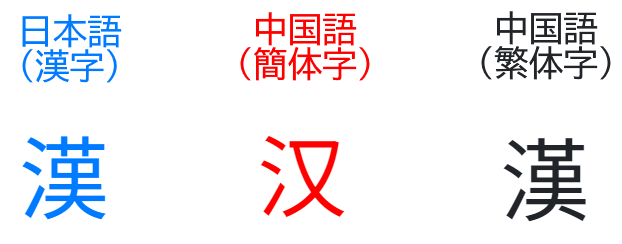
I haven't learned Chinese, so unfortunately I don't know well about it. However, I know Modern Chinese has two types of Kanjis.
In Japanese, we call them Hantaiji and Kantaiji. Some characters are same, but now often Kanji (Japanese), Hantaiji and Kantaiji (Chinese) are different. (Like you see above.)

Thus, in Chinese looks different, but most of Kanjis are exist in Chinese, too.

However, Japanese has some original Kanjis, that not exist in “ancestor” of Kanji.

For example, 畑 (Kun reading: Hata, Hatake / On reading: -), 働 (Kun reading: Hatara / On reading: Dou) and 榊 (Kun reading: Sakaki / On reading: -).

Agriculture is absolutely strongly connected to Japanese culture and history, working hard is important in Japanese way of thinking, and Sakaki is one of the strongest connected plant with Shintoism.
“Made in Japan” kanjis are very likely nessesary to have for Japanese people.

One last example Japan-made-kanji 鱈 (Kun reading: Tara / On reading: Setsu) is probably Icelandic people also needed.
Because this kanji means "cod fish", which is very important word when we talking about Iceland and their culture.

I found it's interesting that the Kanji which means important fish for Iceland, where I felled in love is made in Japan.


Monday, July 1, 2024

nr.7 : どんな鳴き声?


Keigo, Causative-passive, Ageru&Morau&Kureru... There are many characteristic grammars in Japanese language.
And I believe that we cannot forget “onomatopoeia” if we talk about what can be a “significant” grammar of Japanese.
(By the way, the origin of the word “onomatopoeia” is Ancient Greek language, then Japanese import from French language. Japanese words for onomatopoeia are; Gion-go, Gitai-go and Gisee-go. On means sound, Tai in this case can be translated as situation/condition/state, and See means Voice.)

There are millions of onomatopoeia in Japanese, and they describe a lot, like sound, voice and even situation.

I cannot talk about all of them in one short blog, so this time, I focus on “voice (/call /cry...)” of animals.
Because I believe that many language have this kind of onomatopoeia.

Dogs barking in English: Bowwow. In Japanese, they say Wan Wan.
Cats are Nyaa or Nyan.

I listed some “voices” below. Please guess what animals' voice are they.
The answer is the last part of this blog post.

Do you agree the Japanese sounds? Or do you think they are too strange?


  1. Mee
  2. Moo
  3. Hi hii n
  4. Chuu
  5. Gaoo
  6. Piyo piyo
  7. Pa oo n
  8. Ko ke ko kkoo


Thursday, June 27, 2024

nr.6 : ステキな助数詞


Do you know the song “Ippon demo ninjin”?
This was (and actually “is”) one of my favorite Japanese children's song.
As you hear in the song, there are various counters in Japanese.


Once I got a question from one student regarding the number of counters in Japanese.
When I tried to find an answer for the question (2018 if I remember correctly), I couldn't find any clear number.
So we don't know how many counters exist in modern Japanese, but according to the research in 1997, many people use 141 different counters correctly.


So, actually when we started talking about counters, there are endlessly interesting topics about them.

However this time, I want to mention about one of the most beautiful counters in my opinion.

Nowadays, commonly people uses “mai” for counting flat object, such as T-shirts, handout, plate etc..
But there is an another for counting similar things, that is: “you”.

The counter “you” is written in Kanji “HA (EN: leaf)”, and as you see, “you” is used for counting thin things like leaves.
But we can use “you” for example for postcards and pictures, too.

Of course nothing wrong to say:
“Shashin ga ichi MAI arimasu. (EN: There is one picture.)”
However I think “Shashin ga ichi YOU arimasu.” sounds more grace.

As I mentioned above, counter is really interesting grammatical topic in Japanese language, so I will definitely make other blog post in the future.

Probably counters make Japanese language more complicated, but I believe that they make the Japanese more interesting language. 


Thursday, June 20, 2024

nr.5 : 日本語の文字


I believe that for many Japanese language learners, one of the biggest obstacles for starting studying may be the Japanese alphabets/characters.

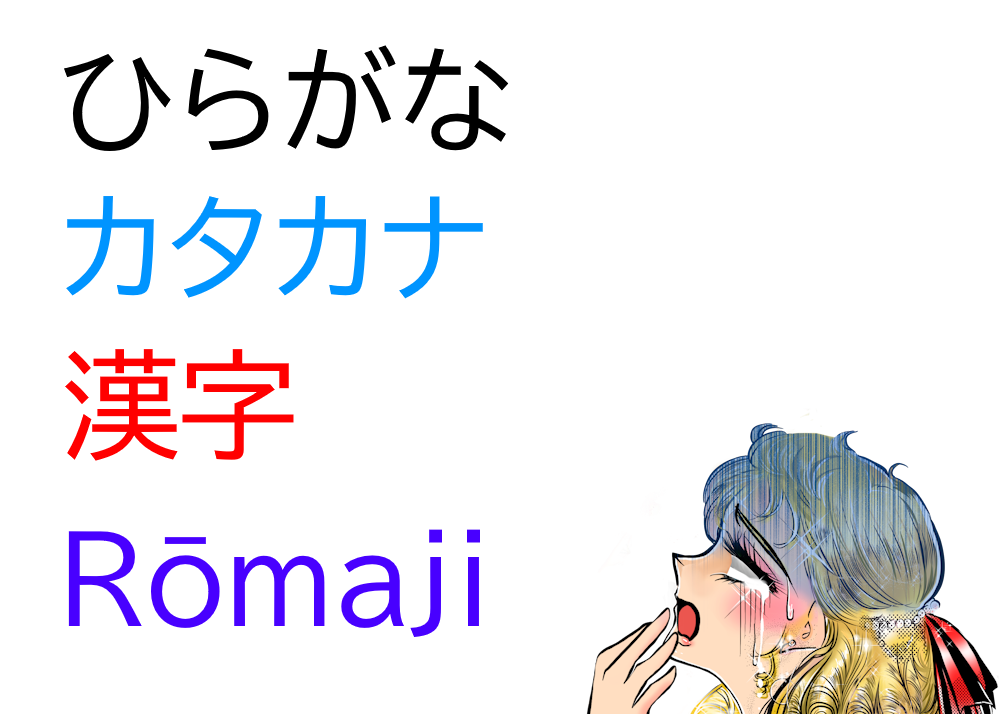
As you know, there are three types of alphabets/characters in Japanese : Hiragana, Katakana, and Kanji.
Moreover, in modern Japanese, often sentences are written using also Roman characters mixed in.
Considering this, Japanese people write and read sentences with a mixture of four types of characters (plus symbols) in daily life.
It seems that not many other languages use more than two kinds of alphabets/characters and mixing them in writing.

Originally, Japanese language had no letters for writing.
However, first, Kanjis were imported from China, then Japanese people made Hiragana and Katakana based on Kanjis.
Simply explain, Hiragana is "simplified Kanji", and Katakana is "a part of Kanji".
According to the latest research, both Hiragana and Katakana were created at roughly the same time.

At elementary school etc. in Japan, often “50 characters of Hiragana and Katakana chart” posters are put up on the wall.
But actually in modern Japanese, only 46 characters are used.
It is not certain that how many kanjis are used in modern Japanese, but 2136 characters on the current Jōyō-kanji list (EN: daily-use kanji characters).

(Around 50 million Kanjis were checked for making Jōyō-kanji list which is published in 2010. So it means that at least 50 million kanji were used in Japan in the early 2000's.)

I'll write separate blog post in the future about "Katakana words", which is very likely another reason to have headaches for Japanese language learners.
But I totally understand that many people who is interested in learning Japanese feel hard taking the first step, when they think they need to understand 92 Hiragana and Katakana characters plus Kanjis to start learning Japanese.

Kanjis help us to guess the meaning of words, and Hiragana and Katakanas are helpful for further understanding of sentences.
So I believe that when people starts studying Japanese and reading texts, then they will really understand and be convinced the reason for the existence of these three kinds of characters, their differences and why Japanese people keep using all of them.

Perhaps first you feel hard to remember them.
But Hiragana, Katakana, and Kanji, all of them are indispensable characters in the Japanese language.
And they will help you to understand Japanese language better.